
In recent decades, papyrology has undergone a transformation that places at its core not only the reading, interpretation, and edition of texts but also the reconstruction of volumina composed of multiple pieces, often preserved under different inventory numbers – or, in the case of Greco-Egyptian papyri, even in separate collections. The need for reconstruction is particularly pressing in the case of the papyri from the Library of the Villa of the Papyri in Herculaneum, which were buried by the eruption of Vesuvius in 79 CE and subsequently opened or unrolled starting in the mid-eighteenth century. These scrolls, which suffered both the damage of the eruption, which carbonized them, and that of their opening, which caused their fragmentation into multiple pieces, are today in an extremely fragile state of preservation. The reconstruction of the Herculaneum papyri has now become an indispensable step for anyone aiming to produce an edition of a Herculaneum scroll, serving as both the foundation and the starting point of the editorial process. This procedure is crucial for establishing the correct order of the fragments, improving the quality of even a highly fragmentary text, and increasing its quantity and continuity.
The virtual reconstruction of a scroll consists of considering all available elements – material, bibliological, archival, and content-related – in order to formulate, based on the surviving fragments, a plausible hypothesis of the original format of the scroll to which they belonged. This process involves reconstructing the initial sequence of fragments within a digital model or maquette. The maquette serves not only as a consultation tool for the reader – providing an immediately comprehensible graphical representation of the edited text – but also as a working tool for the editor, enabling an empirical approach to the arrangement of the fragments (D’Angelo-Nicolardi 2021).
The basic structure of a maquette must reproduce certain fundamental features of the volumen under reconstruction, relating both to its mise en page and to its material state:
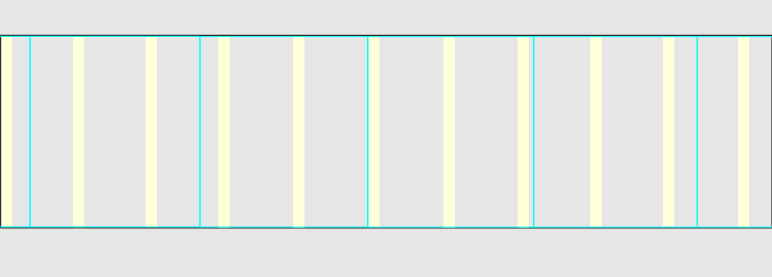
Fig. 1. Basic reconstruction model: circumferences in light blue; intercolumnia in yellow (D’Angelo-Nicolardi 2021)
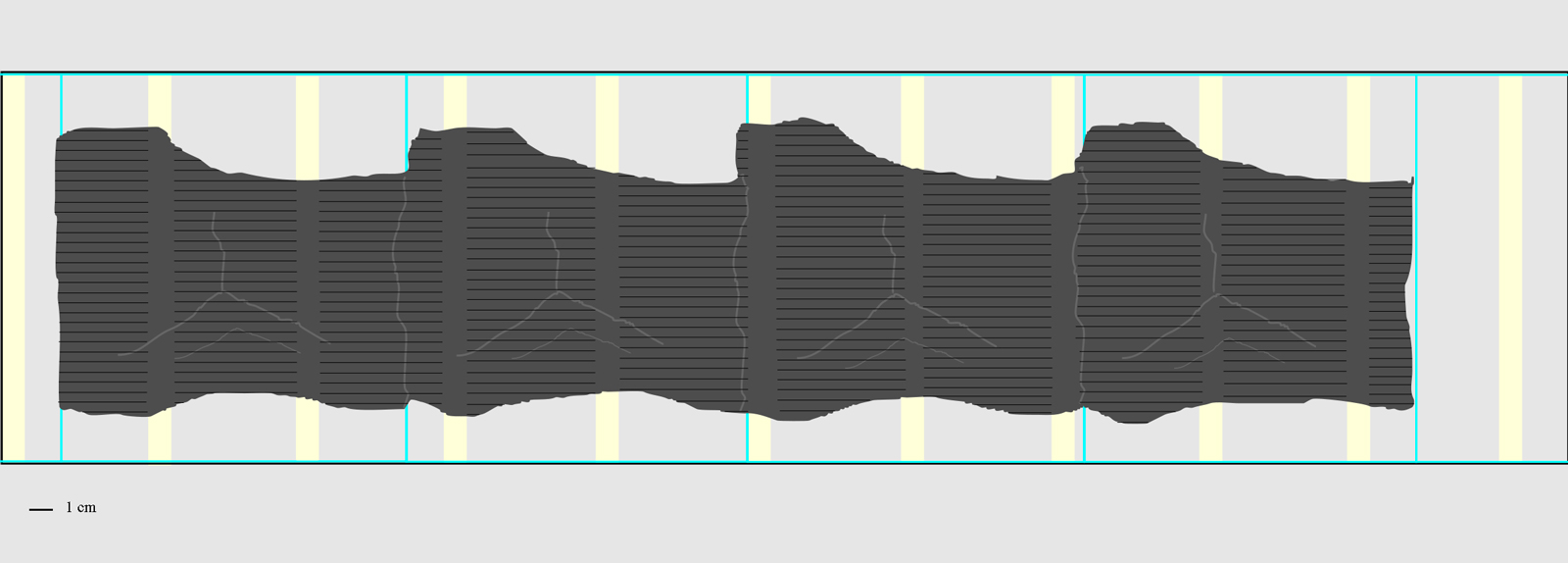
Fig. 2. Arrangement of a piece in the maquette according to the width of the volutes (D’Angelo-Nicolardi 2021)
The necessity of reconstructing Herculaneum scrolls has been widely recognized for several decades, thanks in large part to pioneering editions published by D. Obbink (1996), R. Janko (2000, 2010, 2020), D. Delattre (2007), and G. Leone (2012). These scholars were among the first to include graphical models of reconstructed scrolls alongside their editions. An equally groundbreaking contribution was made by H. Essler (2008), who devised a highly effective geometric method based on material and archival data. He also designed an easy-to-use spreadsheet containing all the necessary formulas for reconstruction (for an overview, see D’Angelo-Nicolardi 2021). In 2016, Janko published the first essential guide detailing the stages involved in the edition of a Herculaneum scroll, beginning with its reconstruction.
Following the initial paper models produced by R. Janko (2000), Delattre (2007) was the first to develop a digital reconstruction model – known as the maquette (a term still used today in its original French form) – for a Herculaneum scroll, publishing it on a CD-ROM as an accompaniment to his edition. This approach was later adopted by G. Leone (2012) for his edition of Book II of Epicurus’ On Nature. Even a decade ago, the advantages of a digital maquette over a paper one were evident, offering not only an ecological benefit but also greater flexibility in rearranging fragments and improved visualization of images. The first maquette to be created entirely in a digital environment, using Adobe Photoshop, was developed by F. Nicolardi (2018). This practice soon became the standard and was followed in the editions of M. D’Angelo (2022), R. Villa (2024), and C. Vergara (2025). However, even with digital tools, the creation of a maquette remained a complex and time-consuming task for scholars, who had to manually construct the entire structural framework of the scroll while adapting a tool not specifically designed for this purpose. Today, Maque-IT represents a significant step forward, offering scholars the first tool specifically designed to facilitate the virtual reconstruction of scrolls.
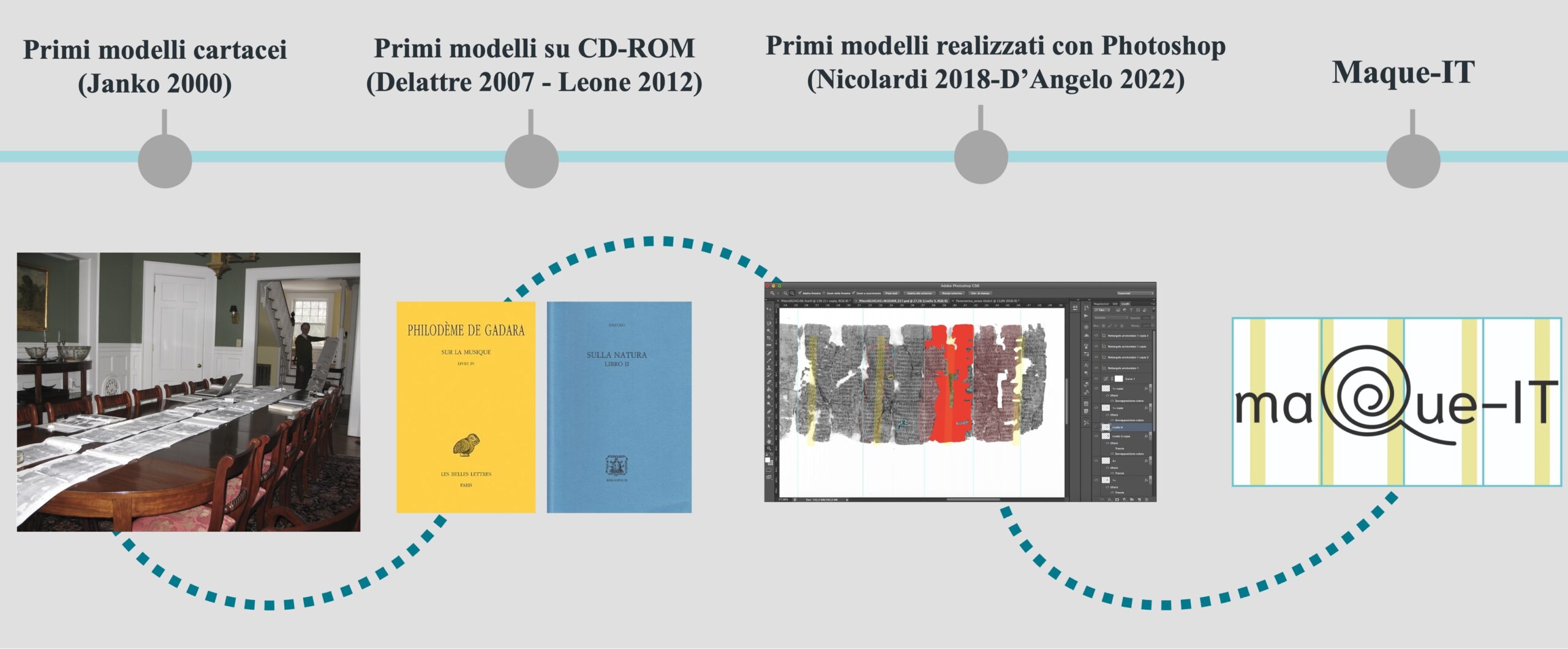
Fig. 3. Maquettes timeline
The reconstruction of a Herculaneum scroll requires addressing a wide range of material issues. In addition to the damage caused by the eruption, in most cases, it is also necessary to deal with the consequences of the two most commonly used methods for opening and unrolling papyri since the 18th century: scorzatura (peeling) and svolgimento (unrolling).
First employed by Camillo Paderni, scorzatura was an especially invasive method of opening a scroll. Total scorzatura involved physically cutting the roll in half to produce two semicylinders (Fig. 4). Partial scorzatura (Fig. 5), on the other hand, consisted of making two or more parallel incisions –first longitudinal, then horizontal – to separate the inner part of the scroll (midollo, or “marrow”) from the outer portions (scorze, or “bark”). The stacks of scorze thus obtained were then put aside, obscuring the relationship between the midollo and the corresponding scorze, which were inventoried separately and later opened by scraping their layers away one at a time: once a layer had been transcribed (disegni), it was destroyed in order to reveal the layer below, until the last layer (ultimo foglio) was reached (Fig. 3). The connection between scorze and midolli can only be determined through a scrupulous inspection of the whole collection, considering all the available data (script, bibliological data, content, and archive documentation). Scorzatura also resulted in the impossibility of obtaining consecutive columns from fragments of the same stack of scorze and the loss of information about the original position of the scorza in the roll. Thanks to geometrical calculations developed by H. Essler (2008), archival data, bibliological information, and the use of virtual models (maquettes), papyrologists are now able to determine at least the relative position of the scorze and specify their distance in the virtual reconstruction of a scroll (see Nicolardi 2020 and 2022).
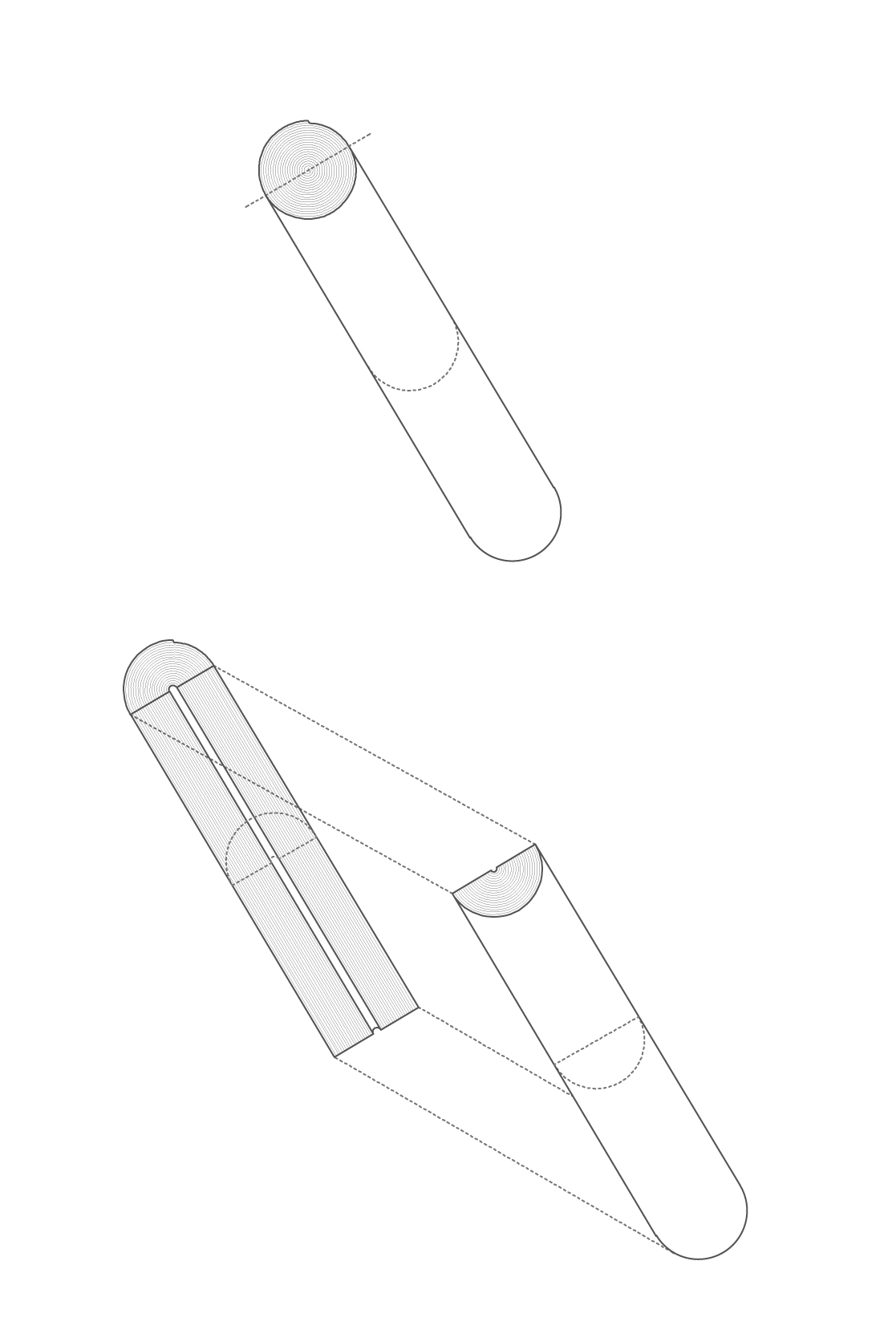
Fig. 4. Scorzatura totale
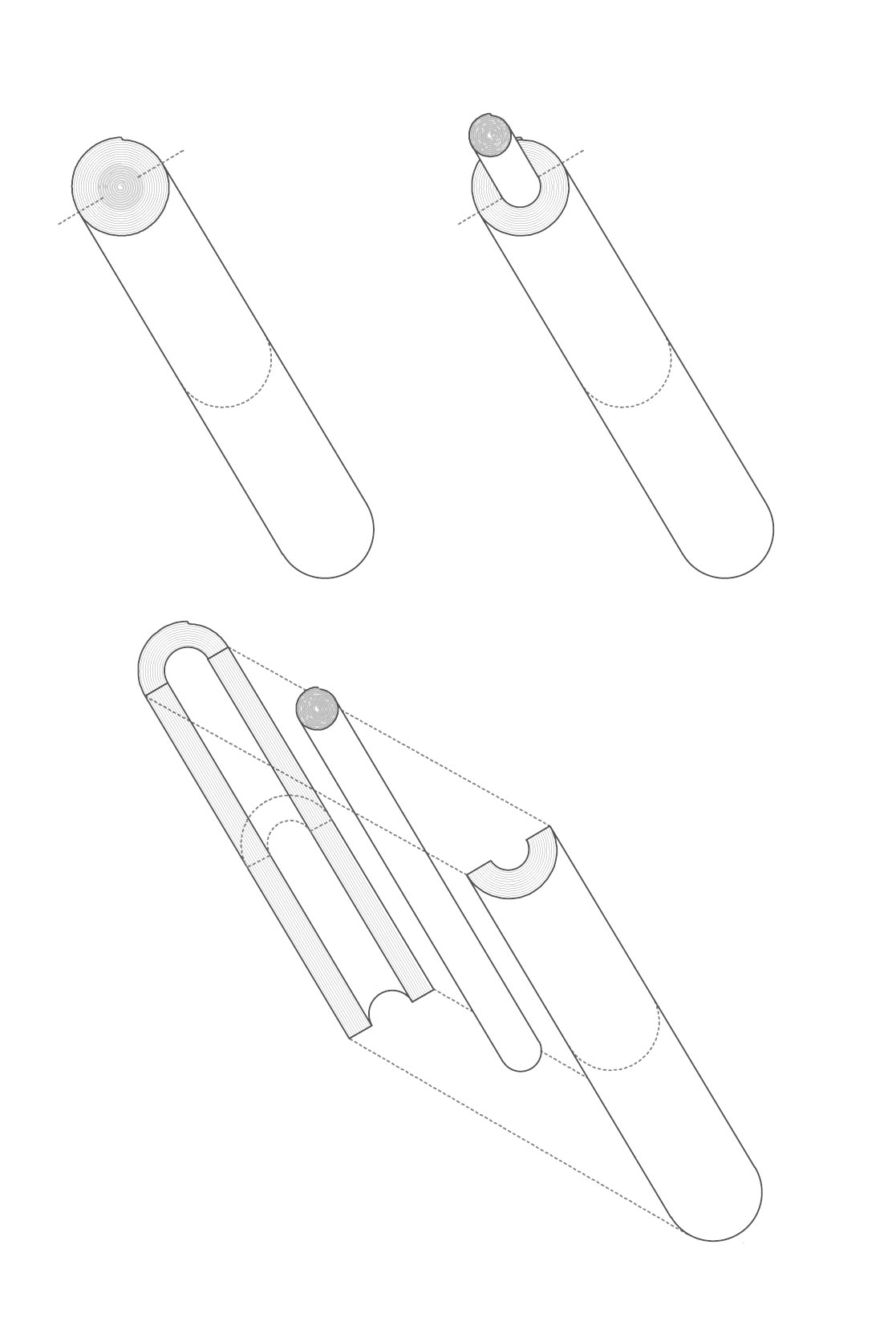
Fig. 5. Scorzatura parziale
No less problematic is the reconstruction of papyri unrolled using Piaggio’s machine, which worked by slowly detaching the outer layer from the underlying one by mechanical traction. Success in detaching the individual sheets was not always attained. On the contrary, it happened very often during this process that, due to the extreme cohesion of the scroll’s volutes (its circumferences, volute), multiple layers of papyrus remained attached to one another. Borrowing a term from geology, scholars refer to this phenomenon as the scroll’s stratigraphy. A displaced fragment from a deeper circumference that has remained attached over the surface of an unrolled layer is called a sovrapposto; a displaced fragment torn off from an earlier circumference, remaining attached under the base layer, is called a sottoposto.
Stratigraphy represents one of the most significant problems in the study of the Herculaneum papyri. The presence of numerous displaced pieces can seriously compromise the reading and the understanding of a scroll’s content, since the mise en colonne of the text appears totally out of order. Restoring the correct order of the layers in a virtual reconstruction is the only way to read the text. The necessary first step is to identify the displaced pieces by analyzing the papyrus under a microscope. Then, the sovrapposti have to be virtually placed in the later circumferences and the sottoposti in the earlier ones (Fig. 6).
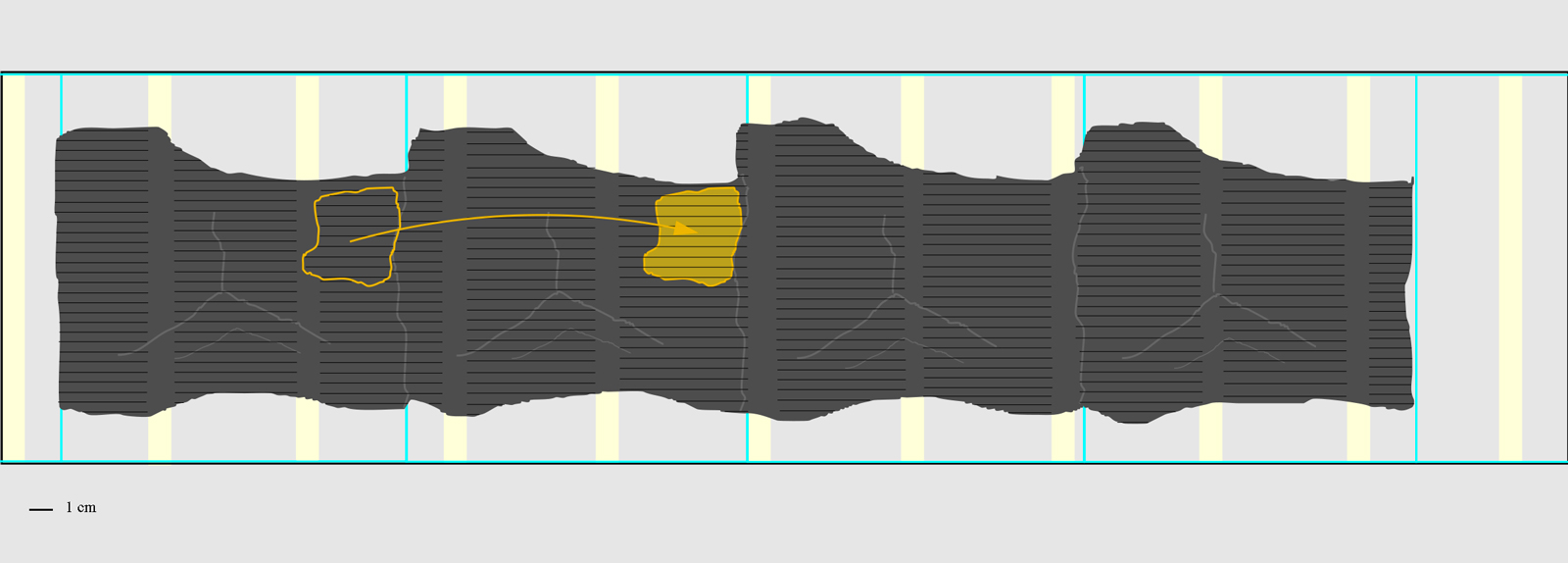
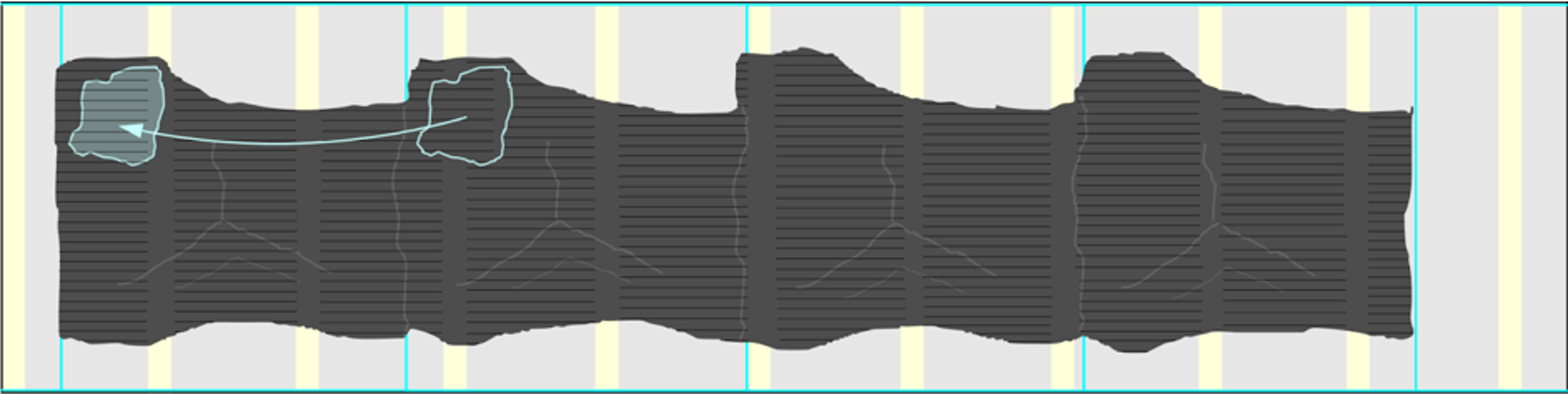
Fig. 6. Placement of a sovrapposto (top) and a sottoposto (bottom)
It is quite common for more than one layer to remain attached over or under the main surface. As a result, a first level sovrapposto must be moved one circumference forward, a second level sottoposto two circumferences back and so on. As is clear from fig. 6, the occurrence of a sovrapposto necessarily results in a hole in the following circumference, just as a sottoposto results in a hole in the previous circumference. However, it is not always possible to observe this hole in the base layer, as such damages are often repeated in several consecutive circumferences and it is frequent that, after placing a sovrapposto or a sottoposto, one runs into another similar displaced fragment. This calls for a chain repositioning (spostamento a catena), a technique recently described and formalized by F. Nicolardi (2019). Following some general rules, it is possible to predict the stratigraphical state of a circumference based on the previous or the following ones. Correctly identifying and placing sovrapposti and sottoposti can revolutionize the study of a papyrus with complex stratigraphy, allowing papyrologists to reassemble lines and columns even from a papyrus that would otherwise only provide sequences of no more than a couple of letters (D’Angelo 2022a, with digital reconstruction, see also 2022b).
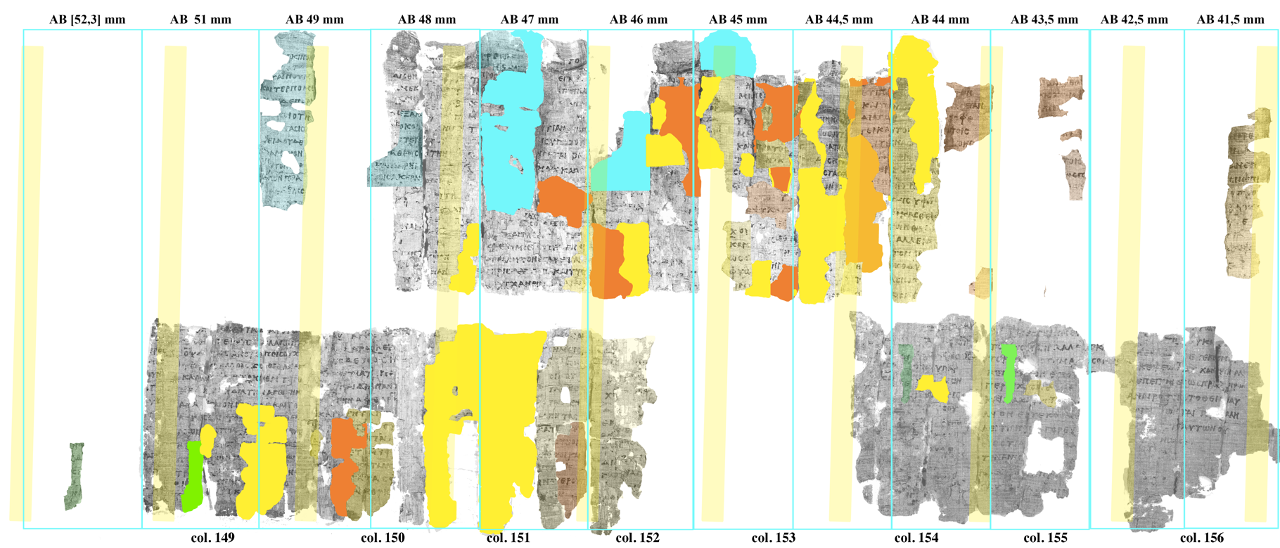
Fig. 7. Portion of the maquette of PHerc. 89/1301/1383 (Filodemo, Opera incerta Sugli dèi), coll. 149-156.
D’Angelo, M. (2022a). Filodemo. Opera incerta sugli dèi, La Scuola di Epicuro, XX. Bibliopolis.
D’Angelo, M. (2022b). Reading and Reconstruction Problems in a Herculaneum Roll with Complex Stratigraphy: The Case of P.Herc. 89/1301/1383. In N. Bruno, M. Filosa, & G. Marinelli, Fragmented Memory: Omission, Selection, and Loss in Ancient and Medieval Literature and History (pp. 103–116). De Gruyter. https://doi.org/10.1515/9783110742046-006
D’Angelo, M., & Nicolardi, F. (2021). Dalla ricostruzione all’edizione dei papiri ercolanesi: Problemi e proposte di presentazione e rappresentazione. Tracing the Same Path. Tradizione e Innovazione Nella Papirologia Ercolanese/Tradition Und Fortschritt Der Herkulanischen Papyrologie Zwischen Deutschland Und Italien, Settimo Supplemento a «Cronache Ercolanesi», 121–138.
D’Angelo, M., & Nicolardi, F. (2023), Chapter 2.4 Digital Herculaneum Papyrology in the ENCODE open online course ‘Digital tools for the research and study of ancient writing cultures’ on the #dariahTeach platform (https://teach.dariah.eu/mod/lesson/view.php?id=1773&pageid=1898)
Delattre, D. (2007). Philodème de Gadara, Sur la musique, livre IV. Les Belles Lettres.
Essler, H. (2008). Rekonstruktion von Papyrusrollen auf mathematischer Grundlage. Cronache Ercolanesi, 38, 273–307.
Janko, R. (2000). Philodemus: On Poems, Books 3-4. Oxford University Press.
Janko, R. (2003). Philodemus: On Poems, Book I: Vol. Aesthetic works, Philodemus. Oxford University Press.
Janko, R. (2016). How to Read and Reconstruct a Herculaneum Papyrus. In B. Crostini, G. Iversen, & B. M. Jensen (Eds.), Ars Edendi Lecture Series, vol. IV (pp. 117–161). Stockholm University Press. https://doi.org/10.16993/baj.f
Janko, R. (2020). Philodemus: On Poems, Book 2: With the fragments of Heracleodorus and Pausimachus (Impression: 1). University Press.
Leone, G. (2012). Epicuro, Sulla natura: Libro II. Bibliopolis.
Nicolardi, F. (2019). Aspetti e problemi della stratigrafia nei papiri ercolanesi: Lo spostamento a catena di sovrapposti e sottoposti. Cronache Ercolanesi, 49, 191–216.
Nicolardi, F. (2020). Scorze e disegni: Una riflessione geometrica. Cronache Ercolanesi, 50, 155–159.
Nicolardi, F. (2022). Per la ricomposizione di rotoli ercolanesi scorzati. In M. Capasso, P. Davoli, & N. Pellé (Eds.), Proceedings of the 29th International Congress of Papyrology (28th July—3rd August 2019): Vol. II (pp. 751–758). https://doi.org/10.1285/i99788883051760p751
Obbink, D. (1996). Philodemus on Piety: Part 1, Critical Text with Commentary. Clarendon Press.
Vergara, C. (in c.d.s.) [Filodemo], [La provvidenza], La Scuola di Epicuro, XXI Bibliopolis.
Villa, R. (2024). PHerc. 353, Scriptor Graecus incertus, Opus incertum. Ricostruzione ed edizione, Cronache Ercolanesi 54, 135-218.